

STEPHANIE BERKELEY, MANAGER, FARM SAFETY FOUNDATION
Farming is one of the most rewarding industries, but it can come with its own dangers.
When something goes wrong, it often happens quickly and in remote locations where help can take time to arrive. In those critical moments, it isn’t a trained paramedic who is first on the scene – it’s a farmer, a family member or a colleague.
And what they do next can make all the difference…
In Northern Ireland, for example, the Air Ambulance can be airborne in 5 minutes but take up to 25 minutes to reach the scene of a farm accident. That’s 25 minutes where someone’s outcome may depend entirely on the actions taken by those already there. This “golden hour” between incident and professional medical care is where basic first aid knowledge becomes life-saving.
There are small but powerful steps that can help speed up that response time:
- Calling 999 and clearly stating “farm accident” helps dispatchers understand the severity and context immediately.
- Having your location ready using what3words can also ensure that emergency services can find you even in the most remote or hard-to-access areas.
These simple actions can shave valuable minutes off response times – minutes that matter.
While emergency services such as the Air Ambulance deliver an extraordinary, life-saving service, they face significant and growing challenges of their own. Midlands Air Ambulance Charity reports that each mission costs an average of £2,950. In Northern Ireland, the Air Ambulance NI attends an average of 2.3 incidents every single day – a relentless demand that highlights just how critical these services are.
At the same time, rising aviation fuel costs are placing increasing financial pressure on air ambulance charities across the UK. And while some regions are expanding coverage, helicopter operations are still generally limited by daylight and conditions, with many services relying on critical care cars to provide overnight response.
All of this underlines a crucial point: we cannot rely solely on emergency response – we must empower those on the ground.
First aid matters
A new survey of 408 UK farmers and agricultural workers, released for this year’s Farm Safety Week, has highlighted a striking generational divide when it comes to first aid training across the industry.
While over two-thirds (68.3%) of farmers under 40 say they have received first aid training, this drops to just 58.9% among those aged over 40. The gap becomes even more pronounced when looking at those who have experienced a farm accident: nearly eight in ten (79.7%) young farmers reported having first aid training, compared to just 55.3% of older farmers
The findings suggest that while younger farmers are increasingly prepared to respond in an emergency, there remains a significant proportion of the workforce, particularly among older farmers, who may lack the confidence or skills to act in those critical first moments after an incident.
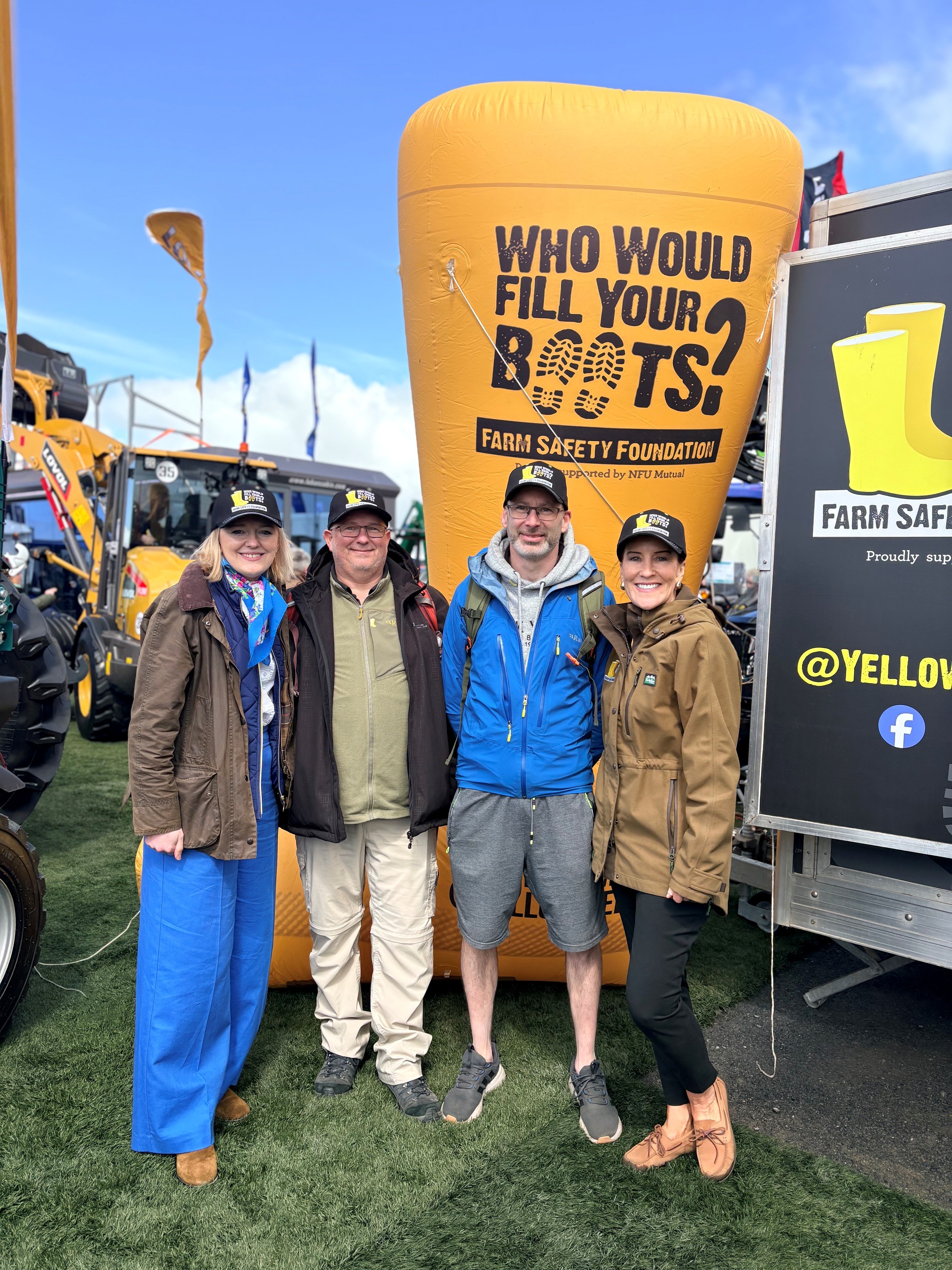
Dr Rebecca Orr, Dr Ian Erskine, Dr Davy Green & Stephanie Berkeley pictured at this years Balmoral Show
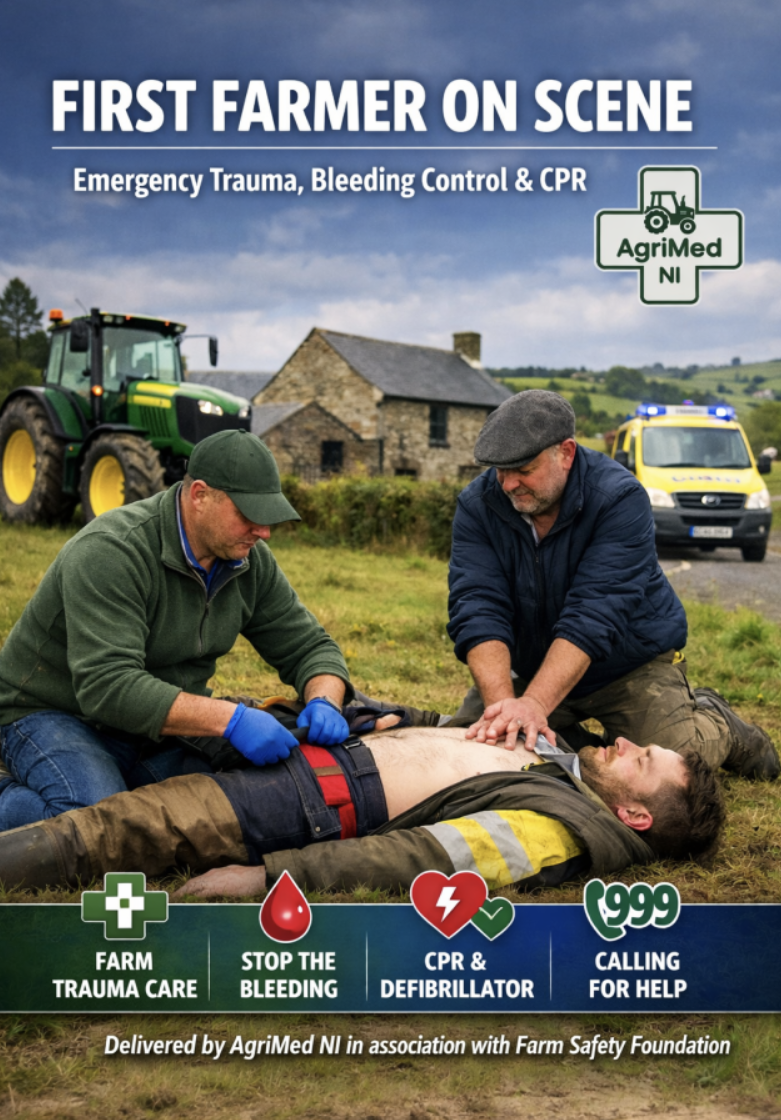
That’s why we’re delighted to be working with Midlands Air Ambulance (MAAC) and AgriMed Northern Ireland – led by Dr Davy Green and Dr Ian Erskine – to fund 100 farmers across the Midlands and Northern Ireland to take part in ‘First Farmer on Scene’ training, helping ensure more people have the skills needed to save a life on farm.
This practical (3-hour) course has been designed by MAAC to give learners the skills and confidence to manage a casualty at the point of injury before the arrival of emergency teams. This isn’t about turning farmers into paramedics. It is about giving people the confidence to pause, assess a situation and take simple, effective action. Whether it’s dealing with machinery incidents, falls from height or livestock-related injuries, having that knowledge can mean the difference between a situation stabilised and one that escalates.
The course is written and delivered by experts in pre-hospital care and offers key skills including casualty and scene management with hands-on practice under expert tuition and simulated activities. It is practical, relevant and easy to apply in real-life situations. Because when an accident happens, there’s no time to look up instructions. What matters is what you already know and how you apply it under pressure.
At its heart, this work is about changing mindsets as much as building skills. When you work in isolated environments, often alone and miles from immediate help, those skills can make all the difference. First aid is not an “extra” – it’s an essential part of farm safety.
 Because on a farm, the first responder is rarely a professional. It’s YOU. And being prepared could save a life.
REGISTER HERE for the Free First Farmer on Scene course:
Midlands Air Ambulance Charity (MAAC) operates and funds three air ambulances covering six counties including Gloucestershire, Herefordshire, Shropshire, Staffordshire, Worcestershire and the West Midlands. The training will take place at their Cosford HQ or Strensham Airbase:
Cosford – Thurs 8 October 2026 6:00 PM – 9:00 PM
Midlands Air Ambulance Charity HQ, TF11 8UR
To secure your place CLICK HERE
Strensham – Multiple dates and times
Midlands Air Ambulance Charity Strensham Airbase, WR8 0BZ
To secure your place CLICK HERE
Northern Ireland – Thurs 20 August 2026 10:00 AM or 2:00 PM
Anderson’s Farm, 81 Garryduff Road, Ballymoney Co Antrim
To secure your place CLICK HERE


